Friday, 23 December 2016

Researching 'good practice' in teaching & learning for your dissertation?


Here are some links to some useful starting points for your literature review, arranged by theme (but in no particular order):


English as an additional language/bilingual learners:

Autistic spectrum disorder:

Talk and literacy:

Music and cognition:

Play:


Creativity/the arts:

Grouping pupils by ability:

Learning styles:

Early years/KS1 transition:

Developing communication skills/pupils with SEN:

Links between prisons and universities:

Saturday, 27 December 2014

Writing at Masters' level: What is "Masters' voice"?

Criteria for assignments set at Masters’ level (or level 7) will probably allude to a set of generic descriptors from the Quality Assurance Agency for Higher Education.  Amongst other expectations, these descriptors anticipate that holders of Masters’ level qualifications can:
·      demonstrate systematic understanding (of the area being discussed)
·      demonstrate critical awareness of current problems/new insights
·      evaluate critically current research and scholarship
·      deal with complex issues systematically
·      communicate conclusions clearly (to specialist and non-specialist audiences)


So what should you be doing in your assignment to demonstrate that you've got this Masters' capacity?


Implications of Masters' level writing - what you'll be doing
In practice, demonstrating that you are doing this could take many forms.  Here are a few questions you could ask as you review your work before submission - the questions relate occasionally to assignments focusing on teachers' professional practice, but could be transferred to other contexts:


Self-evaluation questions to pose before submission
I've used the concept of simplicity a few times.  Simple means 'easily understood' or 'uncomplicated'.  You'll be dealing with complex ideas, so aim to express these as simply as you can (because you want the reader to understand what you're trying to say).  Simple is not the same as simplistic, which involves treating complex ideas as if they were simpler than in fact they are.  It is worth reading your work to a friend: the friend might not be interested in what you've written, but if they don't understand what you've said then you know you've got to do something before submitting.

Brookfield writes on thinking (and writing) critically, and explores assumptions and how these link to dominant ideologies.  You can read his chapter on critical thinking here.

Friday, 21 November 2014

Thumbs down for thumbs up...and an alternative

It used to be commonplace for teachers to ask pupils to self-assess at the end of lessons using a thumb up or a thumb down (and occasionally a thumb neither up nor down).  Thumb up indicated success or "I managed that comfortably" or "I understood everything".  Thumb down indicated failure or "That was really hard" or "I didn't get it".  

There are problems with this.  Let's for a moment assume that it works, that it's an accurate way for pupils to communicate self-assessment judgements.  Which group of pupils will tend to raise their thumbs at the end of the lesson?  And which group will tend to lower theirs?  It's not rocket science.  As an assessment tool it won't tell you anything you don't already know.

Actually, in practice, few pupils will want to be "the one that didn't get it", so a pupil who has struggled may put his or her thumb up (along with everyone else) to indicate success.  Essentially, as an assessment method it's unreliable.  (You could ask pupils to close their eyes and then raise or lower their thumbs - do you really think that's going to work?)

And this goes for any simple self-assessment system - traffic lights spring to mind as a similarly ineffective strategy.  The principle of asking pupils to make judgements about their own progress is a very sound one, but a short cut like this won't hack it.

However, you could try using thumbs up/down differently.  Try asking pupils at the end of the lesson how challenging they found the lesson.  Thumbs up for challenging, thumbs down for unchallenging.  Why?  Because you want your lessons to be challenging. Challenging is good. Challenging drives pupil progress.  Challenging demonstrates that you have high expectations.

And what will happen?  Pupils will need to get used to it (because they've spent so long getting used to thumbs up meaning easy), so it'll cause some confusion initially.  But then, once it's established, you'll have an useful pupil-centred evaluation tool.  What you want is for all pupils to put their thumbs up to indicate that they've been challenged.  Are all pupils in all of your lessons challenged?

Developing pupil ownership

If you've been following these posts, you'll have picked up the theme of pupil ownership.  I think this is important.  The model of a teacher-driven, teacher-centred classroom is outmoded.

The future is uncertain, the skills that pupils will require when they leave school are unknown: of the seven- or eight-year olds you teach next week, many will leave the school system in 2024.  This is a sci-fi year.  Children won't know what 'driving' means or 'handwriting' or 'shopping trolley'.  We don't know precisely what skills young people will need, but we do know that they'll either need to work things out for themselves/make informed decisions/evaluate what they've done, or that we should equip them with the capacity to self-manage, self-assess and self-evaluate.

And if developing pupil independence isn't a substantial enough carrot, the Teachers' Standards require that pupils are guided to reflect on the progress they have made and their emerging needs and encouraged to take a responsible and conscientious attitude to their own work and study.


How could you go about this with the children in your class this week?  You could start by auditing your current practice. To the right are some questions you could ask yourself. Inclusion of any these elements would indicate a degree of pupil ownership.  (Just to acknowledge the possibility of some of these elements would be a starting point.) But if pupil ownership is part of your classroom climate then these elements are not bolt-ons.  This way of thinking should become integral to your practice.


To get pupil ownership up and running, identify some gaps and start putting some steps in place.  For example, at the start of a new topic (or theme or unit) ensure there's sufficient space  (time, opportunity) for pupils to identify what they already know and the skills/knowledge they'd like in place by the end of the topic. This is curriculum design and that's your first lesson of a new unit planned (in skeleton form).  There's an example of the left of doing this using a KWL grid and an iPad. 


When reporting back, pupils could decide the method or tool to use - poster, presentation, video, podcast.  Remember: this is the 21st century - why do pupils need to write sentences about what they've learnt?   Ensure there's sufficient space for pupils to assess what they've done - encourage them to assess thoughtfully, to be critical friends.  Self-assessment isn't just about colouring in a set of traffic lights or raising a thumb (although this is a start): it's about equipping children to make informed judgements about the progress they've made.

Monday, 10 November 2014

What do we talk about when we talk about "climate"?

Classroom climate makes a significant contribution to effective teaching, according to the Sutton Trust's review of evidence.  Now it's back on the agenda it's even more likely that classroom climate will crop up at interview.   Describe the climate in your classroom.  What do you understand by classroom climate?  How do you create an effective classroom climate? So what is classroom climate?

Essentially it's the characteristic atmosphere/ambience/feel of your classroom.  The adjective positive tends to be attached to the notion of climate.  Kyriacou talks about a positive classroom climate that is "purposeful, task-oriented, relaxed, warm and supportive and has a sense of order".  Bucholz and Sheffler encourage readers to aspire to a "warm and inclusive classroom environment" in which "cooperation and acceptance" is fostered.  There's some danger here that the notion of climate could descend into a spiral of woolly pleasantries.  My classroom provides a warm and welcoming environment in which everyone is accepted and supported.  That seems sceptical, perhaps, but climate is important and it's too easy to launch into a string of vague but positive-sounding adjectives. 

You can get around this by talking about the philosophy that underpins the way your classroom operates.  This philosophy must be rooted in pupil progress - after all, if pupils aren't making progress then what's the point?  Ask yourself what it is about the climate (ambience/feel) of your classroom that enables pupils to progress.  This philosophy should be rooted in inclusivity - this is about all children not just some children.  How do all the children in your classroom know that they are valued, that their learning is important?

Think about the other elements that characterise your classroom practice.  Is the climate pupil-centred or teacher-centred?  Are pupils encouraged to reflect on their learning?  Is pupil ownership a characteristic of the climate in you classroom?

However you see and describe your classroom climate, you need to place yourself at the centre of it.  There's not a contradiction here if you see your classroom as child-centred - you are central to the establishment of this type of climate: you are responsible for the way it is.  Rogers uses the phrase "the nature of teacher leadership" to describe this: through teacher leadership, pupils know how things are (i.e. expectations are clear).

Thinking about classroom climate gives you a critical platform to examine how what you say you believe matches up to what you do in practice.  You may say (to your friends, tutors, mentors, head teachers, etc.) that you believe in one set of principles, but in the classroom you may work to a different set of principles (driven by what feels like necessity, or accepted practice, or by what you really believe).  Brookfield describes the friction “between what we say we believe and what we privately suspect to be true” as cognitive dissonance.  You could ask yourself about how closely the climate you aspire to is matched by the climate in reality.

It's worth thinking about this carefully before interview - you want to end up in a school where the values are in line with your own.

Saturday, 8 November 2014

Games to play instead of playing the worksheet game

Most games involve collaboration, often in the possibly contradictory form of competition. The benefits of playing games stretch beyond the curriculum (in its smaller, National Curriculum sense): pupils can develop strategic thinking, memorising skills, logical reasoning and more.  Pupils will probably engage more enthusiastically with games than with worksheets.  Games allow you to recycle materials: instead of photocopying all those worksheets you could invest in a few reusable resources.  You still need to think about what you want children to achieve in the lesson and decide how the game needs to be adapted.  Here are some suggestions:

Pelmanism.  Infinite variations of the turn-over-two-cards-to-find-a-matching-pair game. Find a pair of adverbs...a pair of prime numbers...a pair of parallelograms...  Some more ideas here: http://edition.tefl.net/ideas/games/32-variations-on-pelmanism/


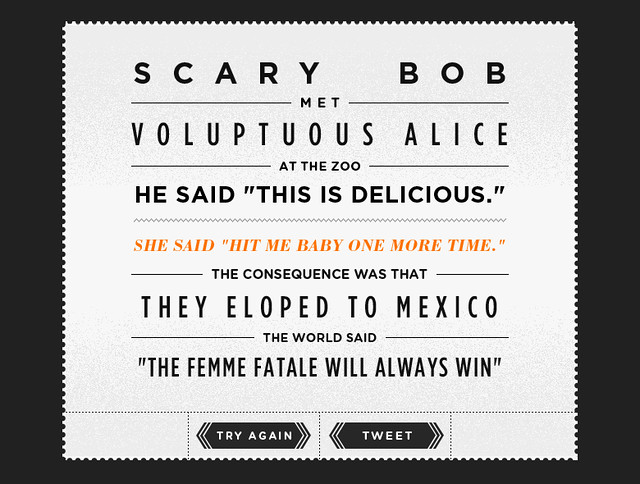
Consequences.  Pupils collaboratively generate sentences or simple story structures.  Opportunities to practice using speech marks and other punctuation.  The rules are here: http://m.wikihow.com/Play-Consequences


I went to the shop.  Adaptable memory game, with opportunities to develop simple extended sentences and lists; opportunities to practice use of indefinite article.  Child 1: "I went to the shop and bought an apple."  Child 2: "I went to the shop and bought an apple and a banana."  Child 3: "I went to the shop and bought an apple, a banana and a concertina."  Some further suggestions here: http://www.teachingenglish.org.uk/language-assistant/games/i-went-shops


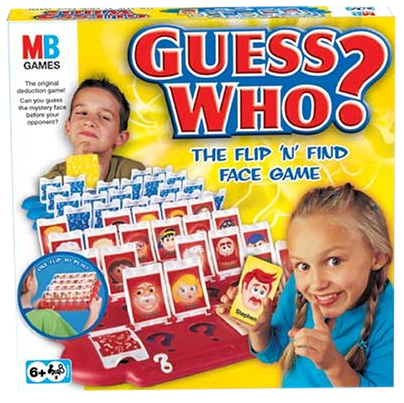
Guess Who.  (I've never understood what the question mark is doing there.) Encourages pupils to frame questions ("Does your person have a red beard?" etc.), supports comprehension development, and logical reasoning.  What more could you ask?  For more ideas see: http://www.speech-language-development.com/guess-who.html


Top Trumps.  Develops strategic thinking, interpretation of information texts, retention of facts.  The National Children's Bureau evaluation of the Schools Top Trumps Tournament (2011) concluded that playing Top Trumps had "positive learning outcomes for children in terms of literacy, numeracy and decision-making skills".

Mastermind.  Develop logic skills, design effective experiments, and discuss scientific reasoning in the classroom.  Have a look at Strom and Barolo's paper, "Using the Game of Mastermind to Teach, Practice, and Discuss Scientific Reasoning Skills" (2011).  

Friday, 7 November 2014

9 things you could do instead of using a worksheet

1. Understanding word problems.  Pupils could create their own sets of questions (based on a question/process you've modelled). You may need to provide some word/phrase banks to get them started.  They can swap the questions amongst themselves and respond.  They can evaluate the questions - if they're too easy they can try to work out how to make them harder.  

2.  Understanding sentence construction or parts of speech.  Pupils could collaboratively generate sentences, passing folded pieces of paper around the table (in the style of consequences).  Each child starts the sentence with a name or article + noun ("John" or "The house", for example) then folds the paper to hide the word/phrase and passes the paper to the child to the left who writes a verb ("runs" or "contemplated", for example).  The round continues (you'll have several pieces of paper circulating at once), with at each stop the addition of another part of speech.  The next one could be adverb ("cautiously" or "often", for example).  You decide an end point and then open up the pieces of paper to reveal the sentences: "John runs cautiously."  "The house contemplated often."  You could add further rules: For this round each word must begin with a T.

3.  Articulating knowledge about a subject.  Pupils could create a mind map or a poster or a display or a presentation.

4. Measuring (length, area, perimeter, etc).  Pupils could draw shapes then find the perimeter or area.  Squared paper might be useful.  Pupils could draw shapes with a perimeter of precisely x cm.  How many rectangles can you draw with a perimeter of precisely 12 cm? 

5.  Presenting research.  Pupils could design their own templates for presenting findings (and then use and evaluate them).

6.  Sentence construction.  Provide a stimulus (a picture, for example) and get pupils to describe what they see.  In the distance there is a snow-capped mountain.  Beside the river a small man with a dog is walking.  This should be a speaking and listening activity, at least to start with.  If children can construct sentences through talk they'll have a better chance of being able to write sentences on paper.

7.  Practising mathematical operations.  Give pupils selections of numbers.  They choose which ones to use to practice the operation you've been working on.  They understand the meaning of challenge (because you have high expectations and have ensured that learning is challenging), so if they find practising with a certain set of numbers too easy, they know to look for numbers that present a more demanding challenge.

8.  Articulating knowledge/understanding/opinion derived from an image/map/artefact. Pupils could think and talk about what they see.  Like you would.  Adults don't look at maps, or paintings, or a Ming dynasty jug, or listen to a piece of music and then fill in a worksheet - they think and talk...about how long it might take to drive from San Diego to Yosemite, about what makes Duchamp's Fountain art, about the blue and white dragon handle, about whether Andy Williams is better than Pharrell Williams.  To facilitate this with children you'll need to get them to think about questions.  And you'll need to model ways of talking about images and artefacts.


Fountain (1917) attributed to Marcel Duchamp

Dragon-handled jug Ming dynasty, early 15th century CE
9.  Practising mathematical operations II.  Here's the answer.  What's the question?  How many different ways can you make x?  Or you could add rules to make it into an investigation: How many ways can you make 48 by multiplying two numbers together?  ...Three different numbers together? ...Four different numbers together?  Is there a pattern?  What is it?  Can you work out the formula?